Watching clouds with a notebook
Make a small record of a moving sky without pretending to forecast it.
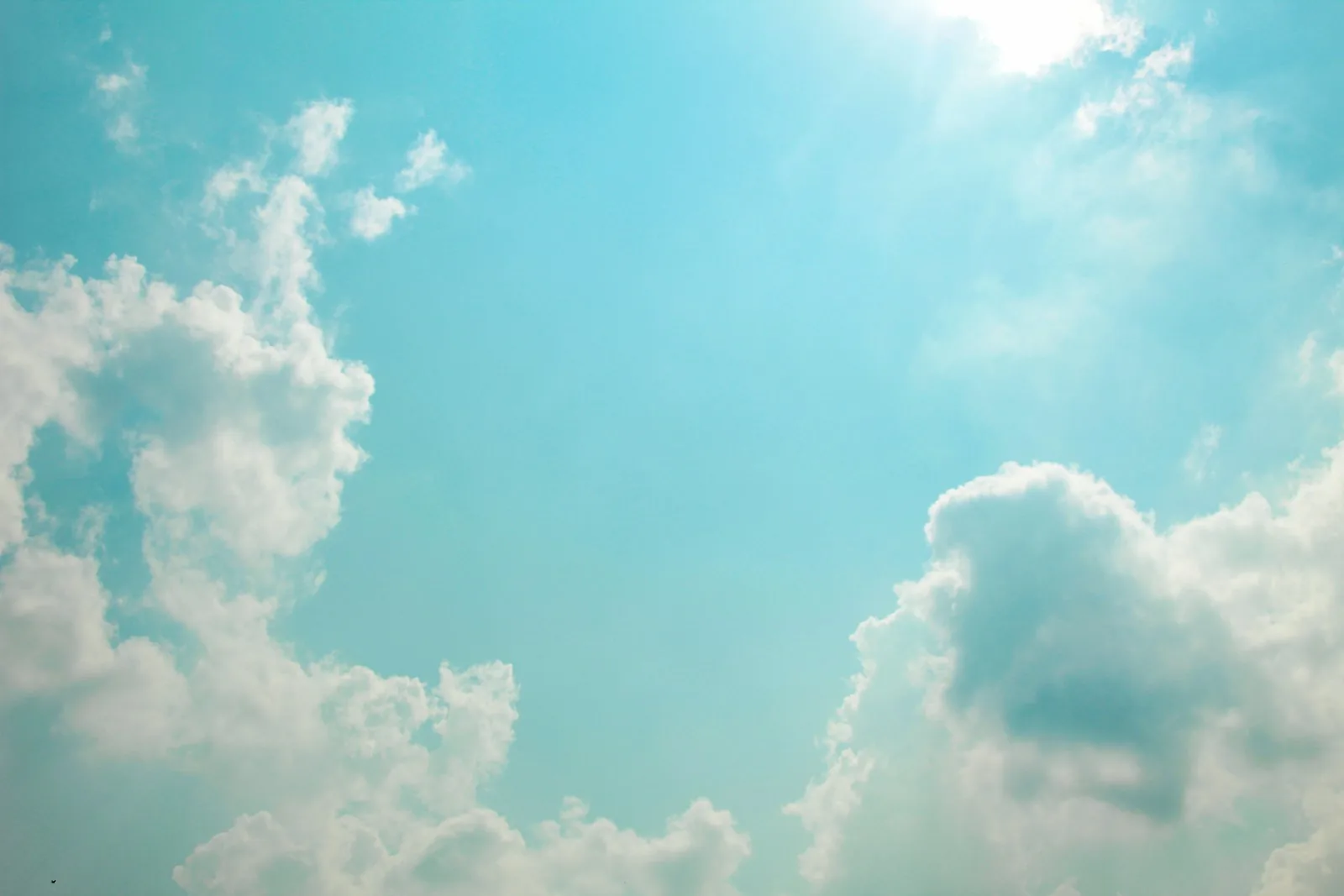
A cloud study begins with something already changing. By the time a line reaches the page, the edge you meant to draw may have softened or moved. That is part of the exercise rather than a defect. Choose a safe view of the sky from a comfortable place and describe a small interval. You do not need to identify every cloud or predict the afternoon's weather. A notebook can hold shape, movement, and uncertainty without being asked to replace a forecast or a weather warning.
Establish a frame and a time
Use a roofline, tree, or another fixed landmark to mark the part of the sky you can see. Write the date and approximate time. If you observe from a window, note reflections or obstructions. Avoid looking directly at the sun, including through gaps in cloud. Choose another part of the sky if the view makes comfortable, safe observation difficult.
Keep the interval manageable. You might make two or three small sketches at noted times rather than trying to complete one elaborate sky. The National Park Service's nature journaling approach values observation and comparison, which suits a changing subject. A few dated marks can show a sequence more clearly than a carefully finished picture that quietly combines several moments.
Keep a second page for comparisons made on different days. Write the date and viewing direction beside each sketch so that a changing sky does not become an undated collection of shapes.
Start with shape before the name
Describe what you see in ordinary words: a thin veil, separate rounded forms, a broad gray layer, or streaks with soft edges. The Met Office explains that cloud classification reflects characteristics including shape and position. You can use its guides to explore names later, but a confident label is not required for a useful first entry. Mark uncertain identifications as tentative.
Clouds can appear at different levels and overlap in a limited view. Do not assume everything visible belongs to one kind or is moving in the same way. Record the separate features you can distinguish without guessing distances or heights. A personal sketch is not an instrument reading, and apparent size alone does not establish how far above you a cloud sits.
Notice the spaces between forms
Draw the main masses lightly and leave the gaps of visible sky. Those negative spaces can make the arrangement easier to compare than a dense patch of pencil shading. If the sky is overcast, describe variation within the layer rather than inventing separate cloud shapes. The available conditions determine the study; there is no requirement for a picturesque sky with distinct white clouds.
Choose a simple way to indicate tone. One area may be darker than another, but that difference does not by itself explain the weather that will follow. Reflected light, overlapping layers, and your view affect appearance. Use the notebook to record relationships you can see, while leaving meteorological explanations to reliable sources appropriate to the question.
Record movement without pretending to measure it
Compare a form with the fixed landmark after a short noted interval. Use an arrow to indicate its apparent direction through the frame. If the cloud changes shape so much that you cannot follow the same feature, say so. Avoid turning a rough arrow into a wind-speed estimate. Ground-level conditions and cloud movement do not necessarily describe the same layer of air.
A sequence of photographs can help, provided you keep the frame similar and acknowledge camera changes. Automatic exposure may make one image darker, and a wide-angle view may alter apparent proportions. Add written observations instead of treating the pictures as a complete measured dataset. A short note about a disappearing edge can preserve the very change a still photograph cannot explain.
Keep observation separate from preparation
Use current official forecasts and warnings for decisions about outdoor conditions. A cloud notebook is not a safety tool, and a pleasant-looking view does not establish that it is safe to remain outside. If conditions deteriorate or the location becomes uncomfortable, stop the exercise and follow appropriate guidance. Finishing the page is never more important than responding to the situation.
Likewise, do not interpret a short series of personal entries as evidence for a broad climate conclusion. A journal can show what you observed at a particular place and time. Understanding trends requires suitable records, methods, and context. The limit does not reduce the value of looking; it keeps the small record honest about what it can support.
Give the page a final question
Before closing the notebook, write one thing you want to understand: why a layer seemed to break apart, how a guide distinguishes two forms, or whether the same view looks different at another hour. Check a reliable source rather than inventing an answer to complete the story. The sky study can remain open-ended. Its finished result is a more precise encounter with something that continued moving long after you put the pencil down.
Sources & further reading
Background sources for the factual guidance in this story. Suggested exercises and arrangements are editorial interpretations.