One shelf with a little breathing space
An arrangement shaped by what you use, rather than a shopping list.
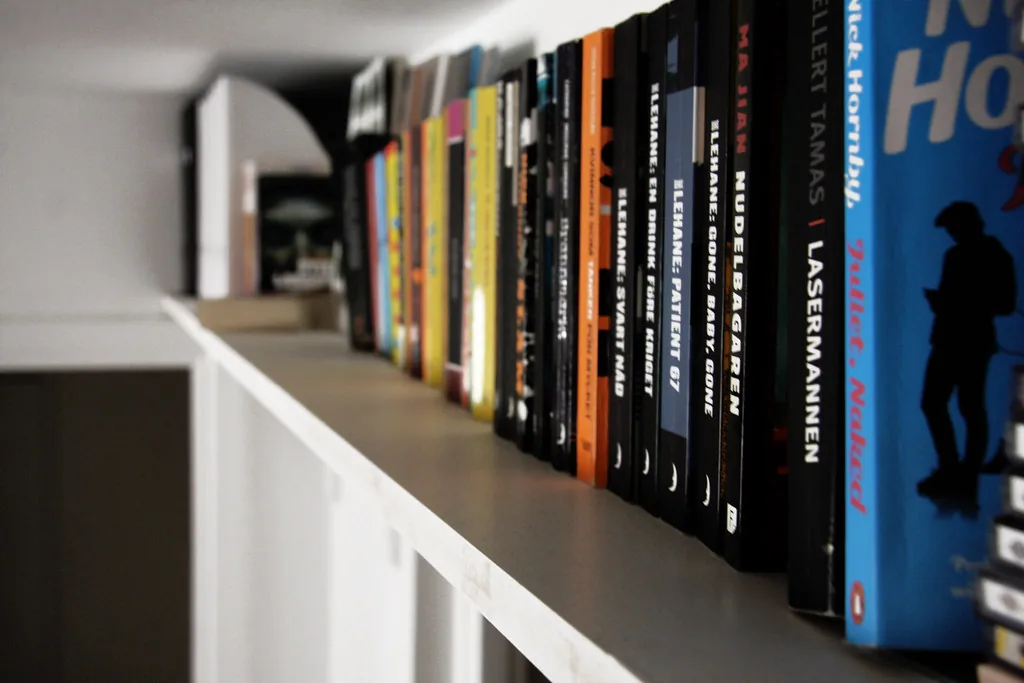
A shelf can become a small portrait of competing intentions. Books you mean to read stand behind a bowl you like, while a plant makes the whole arrangement harder to reach. Rather than starting with a style rule, begin with a question: what does this shelf need to do? A working bookshelf, a display for ceramics, and a place for current projects ask for different arrangements. Choosing one primary job gives you a useful basis for deciding what stays, what moves, and where a little empty space would help.
Empty only the shelf you can finish
Choose a single manageable section and place its contents on a stable, clear surface. Do not begin by unloading an entire room if you only have time for one shelf. Check the surface and supports for damage or movement. A sagging shelf or uncertain fixing is not a styling problem. Follow the furniture's instructions and seek suitable help when its capacity or installation is unclear.
Separate items that belong elsewhere from items you want to return. Avoid making a permanent decision about a sentimental object simply because it complicates today's arrangement. A temporary holding place can give you time to think. The aim is a usable shelf, not a dramatic declaration about what a person ought to own. Keep the scope small enough that the exercise ends with the room available again.
Let use determine the easiest position
Put frequently handled objects where they can be reached without moving several other things. A current reference book should not require lifting a vase every time you want it. A fragile bowl may be better away from a busy edge. In a shared room, ask other users what they reach for. An arrangement that works only for the tallest or most careful person is not necessarily a useful household solution.
The Horniman Museum's home observation exercise suggests looking from unfamiliar positions. Stand or sit where you usually approach the shelf, rather than only viewing it straight on. Can you read the titles? Does an object disappear behind another? Does a plant trail across something you handle? A practical problem may only be visible from the angle where the shelf is actually used.
Support books before arranging color
The Library of Congress recommends keeping shelved books upright and supported rather than leaning. Grouping similar sizes can help neighboring covers support one another. A decorative arrangement that leaves books slumping is a poor exchange for a pleasing photograph. Use appropriate bookends where needed, and avoid packing volumes so tightly that removing one strains the binding or neighboring books.
Large books may need flat storage with full support rather than being forced upright into an inadequate space. Keep valuable or fragile volumes away from strong light and unsuitable environmental conditions. A rainbow arrangement is optional; safe support is not. If the title you want becomes harder to find, reconsider whether the visual scheme serves the people who use the collection.
Create a relationship rather than a collection of props
For a shelf whose job includes display, choose a few objects that have a reason to be near one another. They might share a material, a color, a maker, or a personal association. You do not need every relationship to be obvious to a visitor. A cup and a book can belong together because you use them at the same time, not because a styling formula pairs round and rectangular shapes.
The V&A's account of Aesthetic interiors shows that domestic display has a history, including a taste for combining furniture, ceramics, textiles, and other objects. That history is context rather than a requirement to imitate a crowded historical room. Your shelf can be sparse or full. The important question is whether the arrangement gives the chosen things a clear and appropriate place.
Leave useful empty space
Empty space can be a place to set something down or room to remove an object without catching another. Treat it as a function, not a fixed percentage. A shelf holding daily supplies may need more working room than a quiet display. If an object must sit in a precarious position to preserve an attractive gap, the gap is not earning its place.
Check whether the arrangement can be cleaned without dismantling everything. A complicated stack can make ordinary maintenance so inconvenient that dust accumulates unnoticed. Choose a level of display you are willing to maintain. Keep liquids and soil from damaging books or surfaces, and place plants according to their needs rather than using them to fill a visual vacancy.
Revisit after a week of use
Notice what migrated to the front, what remained untouched, and what was repeatedly moved out of the way. Those changes are information about the shelf's real job. Adjust the arrangement instead of correcting the household back to a photograph. A shelf with breathing space is not necessarily minimal. It is one where the things you keep can be seen, reached, supported, and returned without unnecessary effort.
Sources & further reading
Background sources for the factual guidance in this story. Suggested exercises and arrangements are editorial interpretations.