Drawing leaves without picking them
Look at shape, edges, and veins while leaving the living plant where it belongs.
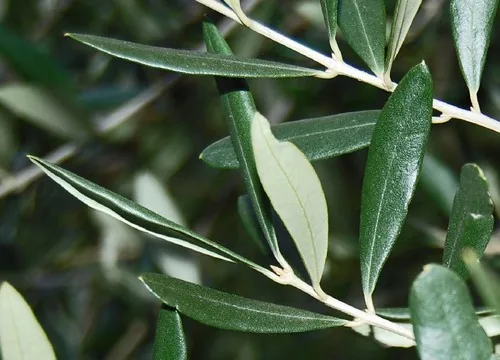
A leaf can be studied while it remains part of a living plant. You can follow the outline, compare the two sides of a vein, and notice the way it turns toward the light without taking it home. Begin with a plant visible from a permitted, comfortable position. Choose a leaf you can see clearly without pulling down a branch or entering a planted area. The drawing is an observation from that viewpoint, not a requirement that nature hold still until you have finished the page.
Choose a manageable view
Look for a leaf whose shape is reasonably visible, with enough contrast against the background to follow its edge. A single leaf partly turned away can be interesting, but a flat-facing example may make the first exercise easier. Do not rearrange the plant to suit the composition. If wind or distance prevents a detailed study, make a broader sketch or choose another permitted view.
The National Park Service's nature journaling materials encourage diagrams and careful observation rather than a perfect artwork. That emphasis lets you begin before knowing the plant's name. Write an uncertain identification as a question, and use a regionally appropriate guide later if you want to investigate. A drawing can preserve features that help with a question, but it does not establish a species on its own.
Find the main direction
Draw a light line for the central direction of the leaf or its main vein. Notice whether it curves, twists, or sits at an angle. Then mark the approximate length and widest point. These relationships can keep the drawing connected to the particular leaf rather than a remembered leaf symbol. Use light marks so that changing your estimate remains easy.
Look at where the leaf attaches to the stem, if visible. Do not assume every plant has the same arrangement. You may see a stalk, a cluster, or a different structure that needs more specific terminology. Describe what is visible in ordinary language until you have checked. A notebook is more useful when it records an unfamiliar feature honestly than when it supplies the nearest confident-sounding term.
Follow the edge in sections
Begin at one point and move around the outline slowly, looking back at the leaf more often than at the page. Are the edges smooth, toothed, lobed, or difficult to see from this angle? Record only the detail you can resolve. A row of invented regular teeth can make the drawing seem finished while making it less accurate as an observation.
The National Gallery of Art's everyday-object lesson explores different line qualities, including contour. You can use that idea here by varying the pressure of the pencil rather than outlining every edge equally. A light mark may describe a quiet boundary; a firmer one may fit a strong contrast. The exercise remains about looking, not achieving a decorative style associated with botanical illustration.
Compare the spaces and veins
Notice the spaces between lobes or neighboring leaves as well as the leaf itself. A small background shape can reveal whether your outline has become too broad or too narrow. Add major veins where visible, keeping their relationship to the central direction. There is no need to fill the surface with a complete network if distance prevents you from seeing it clearly.
If several leaves overlap, draw the one you chose and indicate the overlap simply. Do not invent the hidden section to make a complete symmetrical shape unless you clearly label it as a separate reconstruction. A partial observation is valid. Keeping hidden areas hidden preserves the difference between a drawing from life and an imagined diagram.
Leave the plant and the place intact
NPS Leave No Trace guidance asks visitors to leave natural objects where they are and respect wildlife and other people. Follow local rules, stay on appropriate routes, and avoid damaging surrounding growth for a closer look. In a private garden, permission to visit does not automatically include permission to pick or move plants. A photograph or a written note may be the appropriate limit.
Do not taste, rub, or handle an unidentified plant to add sensory detail. This exercise does not require physical contact. If the plant is out of reach or the setting becomes unsuitable, stop. A page does not need to be completed at the expense of the living subject or your own safe access. You can return under better conditions or choose a different observation.
Add the context that a drawing cannot show
Write the date, general location, approximate conditions, and whether the plant was moving. Note any identification source used later and keep the original uncertainty visible. Compare another leaf from a permitted view rather than collecting a set. The finished page can be modest: a line, an edge, a few veins, and a clearer sense of how one living form differs from the generic idea of a leaf. Nothing needs to be removed for that encounter to remain yours.
Sources & further reading
Background sources for the factual guidance in this story. Suggested exercises and arrangements are editorial interpretations.