Caring for the books you live with
Keep a working bookshelf readable, supported, and away from avoidable harm.
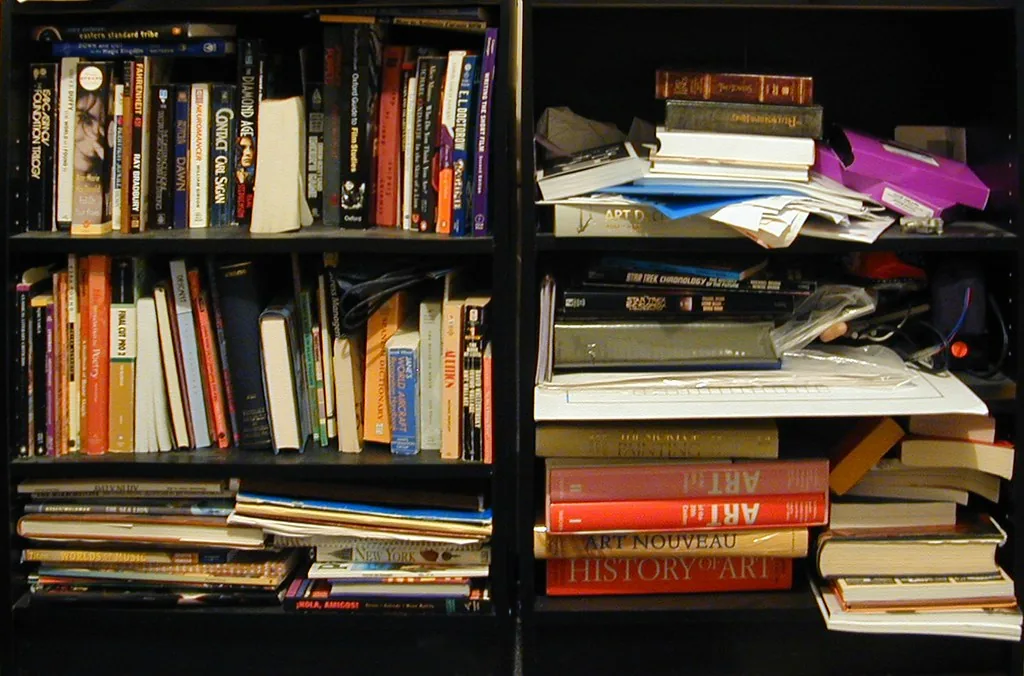
A working bookshelf is meant to be used. Books come down, travel to a chair, wait beside a notebook, and return in a slightly different order. Caring for them does not require treating every paperback as a museum object. It means removing avoidable sources of damage while keeping the collection available to read. Begin with the books that matter most to you, whether their value is financial, historical, or simply personal. Their condition and construction should guide the care, rather than a single rule applied to everything on the shelf.
Look at the storage location first
The Library of Congress identifies stable environmental conditions and good storage as important preventive measures. A shelf beside a radiator, beneath a recurring leak, or in a damp outbuilding deserves attention before you buy protective accessories. Notice the conditions over time. A place that feels comfortable during one visit may still experience strong sunlight, condensation, or seasonal changes that make it unsuitable for valued books.
You do not need to invent precise measurements you have not taken. Record an observed problem plainly: direct afternoon sun reaches the covers, or the wall behind the shelf has shown moisture. Move vulnerable material where practical and address the underlying issue appropriately. A decorative arrangement cannot compensate for a location that repeatedly exposes a collection to water or unsuitable conditions.
Support the books you keep upright
Library guidance recommends standing ordinary shelved books upright, with support to prevent leaning. Similar-sized neighbors can help, and suitable bookends can support a partly filled shelf. Leave enough room to remove a volume without forcing it. Overfilling a shelf may save space while making each use harder on the book and its neighbors. Check the shelf itself for a sound, smooth supporting surface.
Large books may need to lie flat with their full weight supported. Avoid placing a heavy stack on a delicate volume or allowing a book to hang beyond the edge. Fragile structures can require a suitable enclosure rather than ordinary shelving. If you are uncertain about an important book, seek collection-specific guidance instead of improvising a support that places pressure on an already weak binding.
Handle the structure, not just the cover
Wash and dry your hands before handling books, and keep lotions, food, and drinks away. When removing a volume, avoid tugging at the top of its spine. The Library's handling guide recommends gripping the middle of the spine with room made on either side. The purpose is to avoid concentrating force on a vulnerable edge. Take the time to move neighboring books when the shelf is tight.
While reading, let the binding open only as far as it comfortably allows. Do not force a stiff or damaged book flat to get a photograph or make copying easier. Use a suitable support for a volume that needs it. A bookmark should hold a place without leaving adhesive or a heavy object pressing into the pages. Folded corners are convenient in the moment but change the paper permanently.
Keep loose material from becoming a hidden problem
An old receipt or newspaper clipping may explain why a book mattered to somebody. Before removing it, note where it was found and consider whether that relationship is important. The Library's paper guidance recommends separate appropriate housing for material that can affect neighboring paper. A copy or a note can preserve the connection while the original item is stored more safely.
Do not use tape to hold a loose page in place merely because the tear looks straightforward. Adhesive repairs can create new problems and make later conservation more difficult. Keep detached pieces together in suitable housing and ask a qualified conservator about important or fragile material. A broken book can remain readable in a careful arrangement without a hurried repair being treated as an improvement.
Distinguish cleaning from treatment
Ordinary shelf housekeeping is different from treating mold, pests, a failing leather binding, or water damage. Do not brush or spread material that may present a larger problem. Isolate affected items appropriately and seek relevant advice. This article is about preventive habits, not a conservation procedure or an instruction to apply household chemicals to unknown materials.
For housing materials, look beyond a vague word such as archival. The Library explains that such labels alone do not establish useful material properties. Choose enclosures with specifications appropriate to the object, and avoid assuming one plastic sleeve or paper product suits every book or insert. The right choice depends on the material and the condition you are trying to support.
Make care part of returning a book
When a book comes back to the shelf, notice whether a page is loose, a cover is bent, or the chosen space is too tight. A small observation now can prevent repeated damage. Keep a short list of pieces that need specialist attention rather than beginning several repairs at once. The aim is a collection that remains useful: books you can find, handle, read, and return with enough care that the next opening is still possible.
Sources & further reading
Background sources for the factual guidance in this story. Suggested exercises and arrangements are editorial interpretations.