A seasonal paper scrapbook
Collect a few ordinary fragments and give each one a date and a little context.
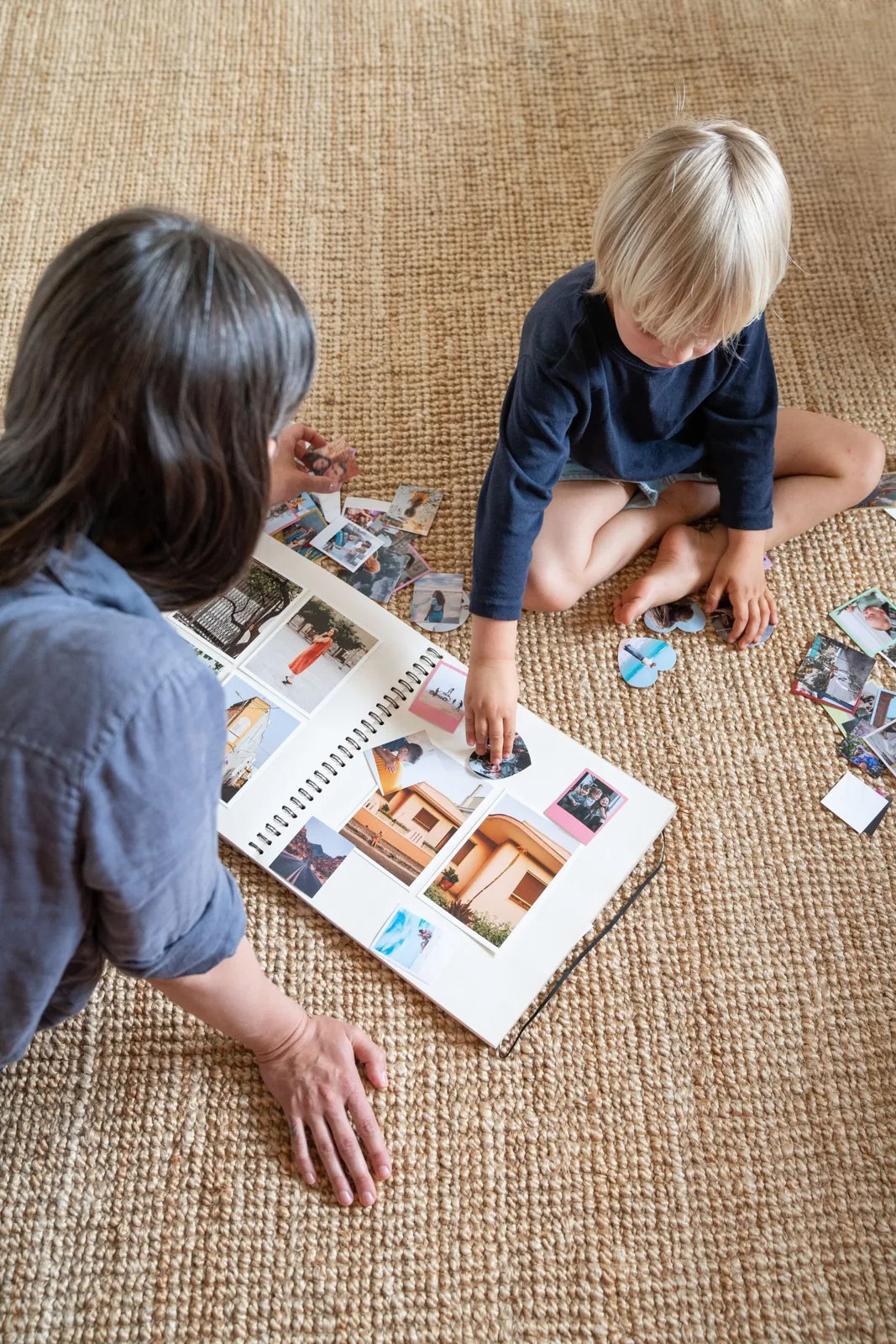
A ticket, a scrap of wrapping paper, and a note about the light on a particular afternoon can hold a season without trying to represent all of it. A paper scrapbook gives those fragments a place and a little context. The first choice is whether you are making a playful working book or preserving irreplaceable originals. Those purposes need different materials and handling. You can combine creativity with care by using copies for experiments and giving important letters or photographs appropriate separate housing.
Choose a small collecting period
Begin with a month or a clearly bounded part of the season. A whole year can become too large before the first page is made. Decide what kinds of fragments you want to keep: printed ephemera, sketches, short written observations, or photographs you have permission to use. Leave natural material where it belongs when collecting is prohibited or inappropriate. A drawing can preserve the observation without bringing a plant home.
Limit the collection to things that mean something you can describe. A decorative scrap is allowed, but add why it entered the book. The place, date, or conversation can distinguish it from an interchangeable piece of visual texture. You do not need a grand explanation. “The paper from the parcel that arrived on the first wet Saturday” may be enough for your own memory.
Plan the structure before attaching anything
The Library of Congress recommends keeping scrapbook size and weight manageable and choosing a structure able to accommodate added material. A tightly bound notebook can become strained when many objects are pasted inside. Consider a modest expandable format or a smaller number of thin additions. Lay out the proposed contents without attaching them and close the book gently to understand the bulk.
Leave space for handling and turning pages. Heavy additions need adequate support, and a fragile leaf should not carry an object simply because the composition looks balanced. If a piece protrudes beyond the edge, it is more likely to catch during use. Change the arrangement or store that piece separately. The page is both an image and a moving structure.
Decide which originals belong elsewhere
Important family photographs, unique correspondence, and fragile documents may be better represented by copies. The Library's paper and album guidance recommends suitable materials and cautions against damaging adhesives and fasteners. A daily craft project is not the place to test glue on an object you cannot replace. Preserve the connection by noting where the original is stored.
For material intended to last, look for acid-free and lignin-free papers and appropriate nonadhesive mounting, such as suitable photo corners. The exact choice depends on the object. Do not assume a product described vaguely as archival is suitable for every photographic process or artwork. When a piece is valuable or its condition is uncertain, obtain more specific preservation guidance before mounting it.
Give each spread a different task
One page can record a walk, another a gathering, and another the colors you kept noticing. Let the material suggest the arrangement rather than forcing every spread into the same decorative template. A dense group of small scraps can sit beside a page containing one photograph and a sentence. Variation helps preserve the different kinds of experience that make a season recognizable.
Keep your handwriting legible enough for the intended reader. If the book is private, abbreviations may make sense; if it will be shared, explain names and places that somebody else cannot infer. Distinguish a remembered detail added later from an observation written at the time. A beautiful arrangement cannot make an uncertain date precise, so leave uncertainty visible.
Keep the work surface separate from refreshments
The Library of Congress's handling guidance recommends clean hands, a clean area, and no food or drink near paper collections. A separate place for the cup is a simple way to keep a creative session from ending in a spill. Let wet materials dry fully before closing the book, following the materials' instructions. Do not use the book itself as a press for unknown damp objects.
When handling a finished scrapbook, support heavy pages and avoid forcing the binding completely flat. An album full of additions behaves differently from an ordinary notebook. Store it in a suitable stable place rather than leaving it exposed to strong light or environmental extremes. These practical habits support the effort already invested in the pages.
End with a little context
At the end of the collecting period, add a short contents note. Record where you were, what the period included, and any changes that explain the pages. Leave space for a later correction without rewriting the whole season into a tidier story. The scrapbook can be incomplete and still be specific. Its purpose is a small, honest collection of fragments that lets you return to how an ordinary part of the year looked and felt.
Sources & further reading
Background sources for the factual guidance in this story. Suggested exercises and arrangements are editorial interpretations.