A card made from paper you already have
Make a simple folded greeting with offcuts, thoughtful words, and a clean crease.
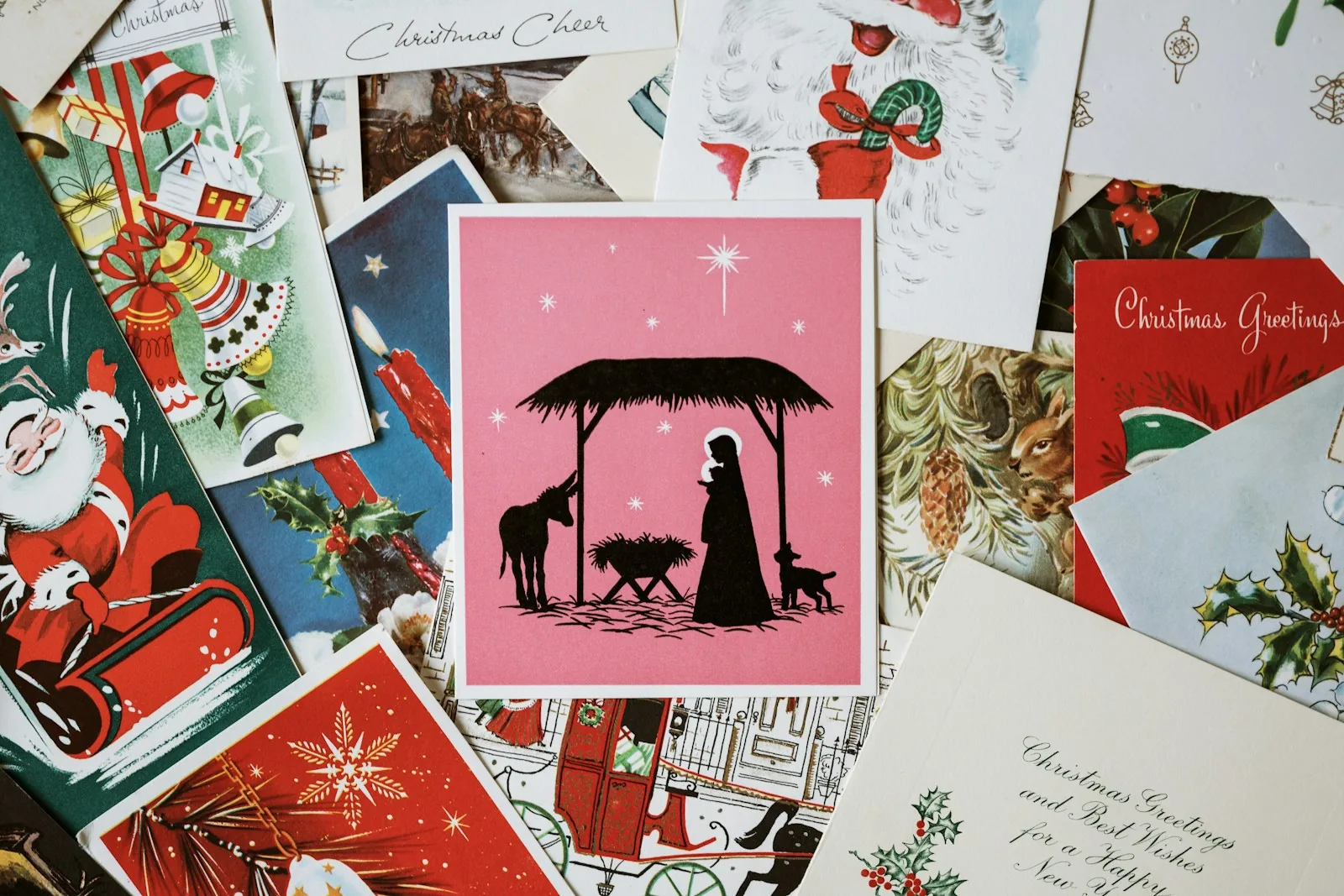
A handmade card can begin with an ordinary offcut and a sentence meant for one person. It does not need a collection of craft supplies or a design complicated enough to prove effort. Choose expendable paper that is clean, sound, and suitable for folding. Keep important letters, old photographs, and valuable printed material out of the cutting pile. The distinction matters: reusing an everyday scrap is a creative choice, while altering an irreplaceable object may remove something you cannot recover.
Begin with the message and the recipient
Decide what the card is for before choosing decoration. A brief thank-you, a birthday greeting, and a note of encouragement ask for different words. Write the message on spare paper first if the final card is small. Leave enough room for handwriting that the recipient can comfortably read. A beautiful surface is not helpful if the message has to be squeezed around it.
Consider how the card will be delivered. A card handed over in person can have different practical limits from one sent through the post. If it will be mailed, check current postal requirements and envelope suitability when it is finished. Do not assume a heavily layered design fits an ordinary letter service simply because the base sheet began as a standard size.
Test the paper before committing
Fold a small spare piece if one is available. Does the surface crack, does the fold spring open, or does the ink bleed through? Very thin paper may need a simple supporting layer, while stiff card can resist a clean crease. Use the material's behavior to choose the design. A modest single fold may work better than a complicated construction on paper that does not cooperate.
The Library of Congress's paper care guidance is intended for preservation rather than greeting-card craft, but it clarifies an important boundary. Do not experiment with adhesives or cuts on valuable originals. For a disposable creative card, use ordinary materials according to their instructions and accept that the result is not necessarily a long-term conservation object. If it contains something important, make a copy or choose more suitable housing.
Keep the fold simple and the edges deliberate
Choose a finished shape that fits your available envelope or delivery plan. Fold the sheet carefully with edges aligned, then smooth the crease using a clean, suitable tool that will not mark the surface. Scissors are enough for many simple designs; do not introduce a craft knife if it adds unnecessary difficulty or risk. Work on a clear surface and store sharp tools when the session ends.
If an edge is uneven, decide whether to trim it or leave it as a visible handmade detail. Both can work when they look intentional and do not prevent the card from closing. Perfection is less important than a sound, legible object. Avoid repeatedly reducing the size while chasing a flawless edge until the message no longer has enough room.
Choose one visual idea
A small arrangement of colored offcuts, a pencil drawing, or a single cut-paper shape can give the front a clear focus. The Horniman Museum's craft activities encourage using accessible materials and simple forms. You can make an original arrangement from your own observations rather than copying a contemporary illustration found online. A drawing of the recipient's familiar mug may mean more than an elaborate borrowed design.
Lay pieces in place before attaching them. Open and close the card to check that the composition does not catch or place too much weight on one side. Use an adhesive suitable for the expendable materials and follow its instructions, allowing it to dry as directed. Do not assume that more glue makes a stronger or cleaner result. If the surface warps, simplify rather than adding another layer to hide it.
Let the words remain the main gift
Read the message once for clarity. Include a concrete detail when thanking somebody: what they did, what you noticed, or how the gift is being used. Avoid requiring the recipient to understand a private reference without context. A short, specific sentence can be more generous than a page of generalized praise. Sign and date the card if it may be kept.
If the card will be shared publicly, check that the message does not expose another person's private information. Photographing a handmade object can accidentally reveal an address, a family name, or personal news. The fact that you made the card does not give you sole control over the story it carries. Decide whether a photograph of the closed front is enough.
Finish for the way it will travel
Check that the card is dry, closes without force, and fits its envelope without catching. Remove any loose scraps that could fall out unexpectedly. Keep a small note about a paper or technique that worked if you want to repeat it, then return the remaining materials to useful storage. The finished card does not need to become a new hobby. It can simply be one thoughtful use of paper already at hand, carrying words that were chosen for somebody in particular.
Sources & further reading
Background sources for the factual guidance in this story. Suggested exercises and arrangements are editorial interpretations.