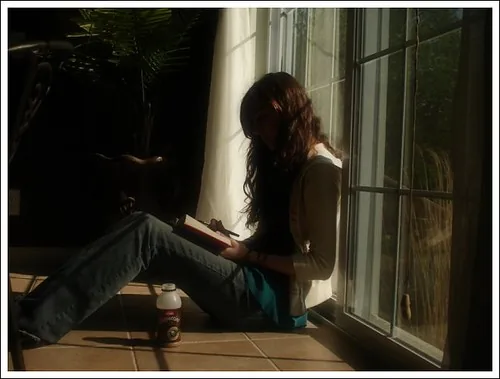
An evening without a second screen
Arrange one ordinary evening around something you can finish with your hands.
Sometimes an evening fills with two things at once: a program playing, a phone in hand, and neither receiving much attention. You may enjoy that arrangement, and there is no need to turn a preference into a diagnosis. But if you would like one evening to feel less divided, try choosing a single activity that has a beginning and an end. This is an experiment in how to spend time, not a promise about sleep, health, or productivity. Keep the parts that fit your actual life.
Define what you want to change
Be precise about the part that bothers you. Perhaps you keep losing the thread of a film because you are reading messages. Perhaps a craft project never starts because the materials remain in another room. Perhaps you want to hear an album all the way through. Each situation suggests a different adjustment. “Use screens less” is too broad to tell you what to do after dinner.
Choose one evening and one boundary. You might watch a film with the phone set aside, read without background television, or mend a sleeve while listening to a single recording. A screen can still be part of the chosen activity. The important distinction is between something you decided to attend to and a second stream that keeps interrupting that decision.
Keep necessary connections available
Do not disconnect from care responsibilities, accessibility tools, or work requirements to satisfy a lifestyle rule. Decide which calls or messages you need to receive, and leave a practical route for them. A person reading on a tablet is still reading. A person following a sewing demonstration on a phone may need that device in front of them. The experiment should support the activity rather than police its appearance.
In a shared home, discuss the plan instead of claiming the whole room. One person may want television while another wants quiet. Headphones, different seats, or a short agreed interval may work better than a declaration that the evening will now be screen-free. If no shared arrangement is possible, choose a smaller activity you can do comfortably within the circumstances.
Put the alternative within reach
The V&A Dundee's repair resources offer small projects such as replacing a button or darning a hole. A project of that scale makes a useful evening option because you can identify the next action before beginning. Gather the specific item and tools, inspect what needs doing, and stop if the material calls for a skill you do not yet have. An evening need not become a rescue mission for a valuable garment.
For reading, leave a suitable book and bookmark ready. For drawing, choose one ordinary object and a pencil. The Horniman Museum's observation activity uses familiar household objects as prompts, which removes the need to search for a special subject. Make preparation small enough that beginning remains easier than browsing for inspiration. An unfinished collection of attractive ideas is not the same as a ready activity.
Choose an ending before you begin
A short story, one row of stitching, or a drawing of a single cup gives the evening a manageable unit. If the task turns out to be larger, decide whether to continue or leave a clear stopping note. There is no obligation to finish an entire garment or book because you set aside a night. A useful stopping point is part of the arrangement, not evidence that you lacked commitment.
For a shared activity, agree what participation means. Listening together may be enough; nobody needs to produce an interesting interpretation afterward. A game or puzzle should be something the group actually wants, rather than a decorative prop for a better kind of evening. The point is to make a choice people can inhabit, not to stage a scene of domestic harmony.
Notice the friction honestly
If you keep reaching for the phone, ask what you were trying to do. Look up a word? Check an expected message? Avoid a project you do not enjoy? The answer may reveal a practical need or a poor activity choice. You do not have to interpret every interruption as a failure of willpower. Adjust the plan to the reason rather than adding more rules.
Likewise, an alternative can be inconvenient for physical reasons. The light may be unsuitable for sewing, the chair uncomfortable for reading, or the task too demanding after a working day. Change those conditions where possible. If you would simply rather watch something, choose that openly and give it your attention. A deliberate ordinary preference is more useful than pretending to enjoy an approved hobby.
Put the evening away
At the end, return sharp tools to closed storage and leave a project where it can be resumed without obstructing the household. Record one practical lesson if you want to repeat the experiment: a smaller task, a better light, a different time. Keep the change that made the evening more usable. You do not need a permanent rule, a dramatic transformation, or a photograph to show that the time was yours.
Sources & further reading
Background sources for the factual guidance in this story. Suggested exercises and arrangements are editorial interpretations.