A simple table for two
Set a welcoming table using what you own, with conversation in mind.
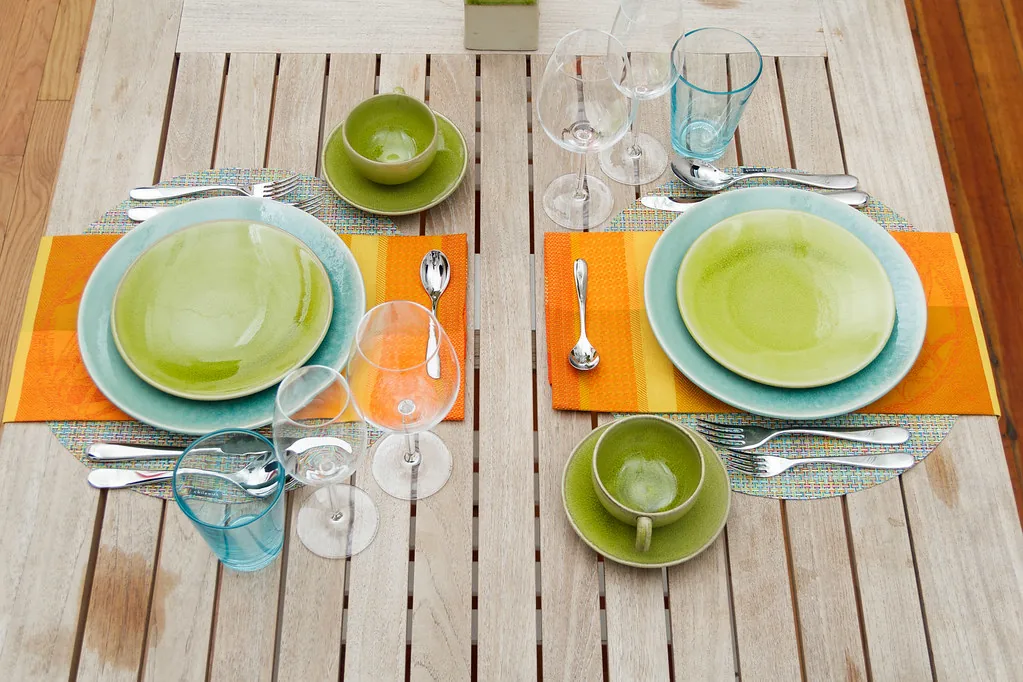
A table for two can feel considered without becoming an occasion that exhausts the person arranging it. Begin with the conversation and the space people need, then let the objects follow. A familiar plate, two useful glasses, and a clean cloth may already be enough. You are not trying to reproduce a restaurant or a photograph. The table's job is to make sitting together comfortable, with room to reach, put things down, and see the person opposite. Everything decorative should earn its place around that simple purpose.
Look at the table in use
Place the chairs where people will actually sit and check the available room. Can both people approach and leave without awkwardly moving furniture? Is the tabletop stable? Will a cloth catch under a chair or trail across a route? These questions should be answered before choosing a centerpiece. A small clear table can be more hospitable than a larger-looking arrangement that makes movement difficult.
Include the needs of the person joining you. A useful layout depends on reach, seating, vision, and how the meal will be served. Ask about practical preferences rather than assuming a formal place setting suits everyone. This is not a prescription for dining etiquette; it is an invitation to make the particular table work for the people who will use it.
Choose a few things already available
Lay out plates, glasses, and utensils suited to what you plan to serve. They do not need to match, but they need to be sound and appropriate for their use. Avoid using a fragile or uncertain decorative object as functional tableware simply because it completes a color scheme. Follow the maker's guidance for items whose intended use or care is unclear.
The Horniman Museum's home observation activity encourages noticing the meaning and material of familiar objects. A table offers an easy opportunity to do that. Perhaps one cup was a gift and another is simply the one that feels best in a hand. You can enjoy the difference without inventing a story to justify it. An ordinary useful object does not need a remarkable provenance to belong.
Let a textile solve a practical problem
A clean cloth or pair of napkins can change the surface without changing the room. Choose a size and material you are willing to maintain according to its care instructions. If the cloth slides or makes objects unstable, reconsider it. A bare tabletop may be the better choice. Relaxed creases and a pressed surface are preferences, not measures of care or hospitality.
The Canadian Conservation Institute distinguishes between ordinary textile use and the preservation needs of cherished or historical pieces. Do not turn an irreplaceable old cloth into an everyday experiment in stain removal. A suitable modern piece may be more comfortable to use. Save a delicate textile for a context where it can be supported appropriately, or seek advice before deciding how it should be displayed.
Keep the middle low and optional
Place any decorative object where it does not interrupt the view or reduce needed serving space. A small vessel can be enough, and nothing at all is a valid arrangement. Avoid bringing unknown plants or collected natural material to the table simply because they suit the season. The easiest decoration may be the color relationship between objects already intended for household use.
Look at the arrangement from the chairs rather than only from above. Can you see the other person easily? Is there somewhere to place a serving dish? Will reaching for water require moving the decoration? A table set for use should survive those ordinary actions. If an object must be carefully replaced after every movement, it may be better on a shelf nearby.
Arrange the light for people
Use existing suitable lighting so people can see their food, the table, and one another comfortably. A warm-looking photograph is not proof that a room is easy to use. Check for glare and deep shadows from the actual seats. Keep unfamiliar electrical arrangements and open flames out of a simple styling exercise. You do not need an elaborate lighting effect to make the moment feel distinct.
Sound can be considered in the same practical way. If music is welcome, keep it at a level where conversation remains easy. If either person prefers quiet, let that be enough. There is no requirement for a carefully curated soundtrack. A table can feel personal because the people using it have been considered, rather than because every sensory detail has been planned.
Make the ending part of the welcome
Before sitting down, decide what can wait and what needs to be put away promptly afterward. Keep the clearing routine manageable and shared where appropriate. The point is not to make preparation invisible or expect one person to carry it all. A simple table for two works when the arrangement supports both the meeting and the ordinary work around it. Its best detail may be how little it asks you to maintain while the conversation continues.
Sources & further reading
Background sources for the factual guidance in this story. Suggested exercises and arrangements are editorial interpretations.